Houston Chemical Plant Explosions Caused by Natural Disasters Underscore Weak Chemical Safety Measures

Hurricane Harvey caused devastating destruction to the Texas coast, from homes to infrastructure to businesses. Unfortunately, because the region is the site of many manufacturing plants, the impact is having far-reaching affect. The explosions at the flooded Crosby, TX, Arkema chemical plant which manufactures organic peroxides is a case in point.

Fires started when the area was flooded and the backup generators failed, eliminating the refrigeration required to keep the chemicals from degrading and catching fire. A buffer zone around the plant was established, employees were sent home and some 5,000 people living nearby were warned to evacuate. Plumes of toxic black smoke shrouded the area as more than two tons of material exploded.

Despite this, the company was slow to release a list of the chemical inventory to authorities and refused to reveal where those substances were stored. Based on the plant’s history this is not surprising: records show that state and federal regulators have cited Arkema for numerous safety and environmental violations at the Crosby plant for more than a decade, with eight “serious” safety violations in the last year alone. Yet the violations continue.

In the end, Arkema performed a controlled burn of six trailers containing the organic peroxide in order to allow workers to enter the facility and begin the cleanup process.

All chemical facilities are required by National Fire Code Regulations to provide a list of chemicals on-site and their locations to local fire departments annually. Emergency responders need to know how to respond effectively and safely to emergencies just such as this. Yet Arkema continued to conceal these facts even with the media spotlight on their reluctance to do so. Now the Chemical Safety Board (CSB) – which was almost dissolved and is still on shaky budgetary ground – has begun an investigation. But will their findings and the resulting fines be just a slap on the wrist for Arkema and will the violations continue? “Chemical safety” seems to be an oxymoron for so many chemical manufacturers.

For an in-depth look at the incident, take a look at Attorney David Halperin’s article in the Huffington Post.

Lawsuits Against Trump Policies Mark First Year of his Presidency

Almost since the start of President Trump’s time in office, lawsuits have been filed against the policies he is implementing, seeking to cancel or delay Trump’s efforts. In the environmental regulations realm, environmentalists have filed lawsuits that challenge the changes to the recently revised Toxic Substances Control Act (TSCA).

When pressure from industry groups led EPA Administrator Scott Pruitt to delay the effective date of the final TSCA rule until February 2019, eleven state attorneys general threatened to file suit to block the delay.

Now that TSCA is back on track, environmental groups are addressing aspects of TSCA implementation, specifically how the Environmental Protection Agency (EPA) will evaluate chemicals. TSCA requires chemicals to be categorized according to their risk factors before new products can be introduced into the market.

Led by Earthjustice, several environmental groups have filed lawsuits addressing: (1) the methodology EPA will use to set the ground rules for how it will prioritize chemicals for safety review, and (2) exactly how it will evaluate those chemicals.

According to EarthJustice, “After Congress took bipartisan action to make desperately needed updates to our chemical safety laws, the Trump Administration has turned back the clock, leaving families and workers at risk,” said Eve Gartner, an attorney at EarthJustice. “The EPA’s newly adopted rules—overseen by a former high-level chemical industry official with head-spinning conflicts of interest—will leave children, communities and workers vulnerable to dangerous chemicals. This lawsuit is about one thing: holding the Trump EPA to the letter of the law and ensuring it fulfills its mandate to protect the public.”

In a release discussing their position, EarthJustice provides comments from numerous other environmental groups, including the Sierra Club, Environmental Working Group, Environmental Health Strategy Center, and others.

In 2016, Congress amended the chemical law, TSCA, for the first time in 40 years. It now requires EPA to conduct comprehensive risk evaluations of chemicals without regard to cost. But Earthjustice said that the Trump administration has “dramatically weakened” the rules and continues to lead efforts to ensure that the rule is not further diluted.

TSCA Inventory Reset Rule Published; 180-day Reporting Period Begins

On August 11, 2017, the Environmental Protection Agency (EPA) published the final TSCA inventory reset rule in the Federal Register, launching the 180-day reporting period for chemical manufacturers to submit chemical substance data under certain procedures by February 7, 2018; chemical processors have a deadline of October 5, 2018.

The report requires chemical facilities to provide information about the chemicals they have produced during the past decade. An estimated 1,600 chemical manufacturers and importers and another 100 chemical processors, which make paints, waxes, cleaning and other chemical-intensive products, are expected to file reports.

For a copy of the EPA’s final rule, 40 CFR Part 710, visit http://src.bna.com/rzD

Chemical Footprint Project Releases Report that Scores Product Chemical Content

The Chemical Footprint Project’s second annual report reveals chemical footprinting moves to the mainstream. A diversity of companies across sectors, sizes, and the globe participated in the 2017 Report – demonstrating its relevance and application to a broad array of companies that sell and/or manufacture apparel and footwear, building products and furnishings, packaging, medical devices, household and personal care products, toys, and electronics. Participating companies had annual revenues totaling over $670 billion.

“For the first time ever, companies are quantitatively measuring and reporting their chemical footprint,” highlighted Dr. Mark Rossi, lead author of the report and Executive Director of Clean Production Action. Companies participating in the 2016 Survey demonstrated how to measure their footprint and revealed their reductions in hazardous chemical use. Over the past two years participating companies that quantified their footprint reduced their use of chemicals of high concern in products by 416 million pounds –enough to fill over 3,600 swimming pools.

“CFP is making data available for benchmarking and gap analysis, which are critical for us to understand where our company and our suppliers are on the journey to more sustainable chemicals,” explained Zach Freeze, Senior Director for Sustainability, for Wal-Mart Stores, Inc., which is the first retailer to participate in the annual survey and is now a CFP Signatory.

Investors and purchasers now have access to data that enables the benchmarking of firms on their progress to sound chemicals management, and companies can assess where they stand relative to peers and identify and prioritize opportunities for improvement:

  • For companies selling liquid-type goods such as household cleaning and personal care products, large companies scored higher for metrics that require policies, systems, and procedures for safer chemicals, while small companies scored higher for footprinting and transparency to the public.
  • For companies selling hard products such as clothing, furniture, and electronics, large companies scored higher across all indices, followed by medium companies, and then small companies. We attribute the higher scores for large companies to greater awareness of chemicals in their products and supply chains, greater resources to manage  chemicals, and greater need to have corporate policies in place to develop and implement chemicals management systems.

The CFP results reveal clear steps to environmentally sound chemicals management:

  • Corporate Policy: establish a comprehensive chemicals policy.
  • Inventory: know the chemicals in your company’s products and supply chains.
  • Measurement: quantitatively measure your company’s chemical footprint, set measurable goals, and monitor progress to these goals.
  • Transparency: engage the public, institutional purchasers, and investors in your firm’s journey to effective chemicals management by sharing publicly your CFP answers and score.

Tracking chemical inputs and measuring progress to safer chemicals is an important metric in tracking progress to the global Sustainable Development Goals (SDGs) and meeting corporate reporting standards such as those developed by the Sustainability Accounting Standards Board (SASB).

The annual CFP Report provides a clear map for benchmarking corporate progress to safe and sustainable products. The four pillars of CFP – Management Strategy, Chemical Inventory, Footprint Measurement, and Disclosure & Verification – enable participating companies to benchmark their progress internally and externally, and empower investors and purchasers to evaluate and hold companies accountable.

Industry Lobbies to Slow Implementation of New Ozone Standards

There appears to be some push back against a bill passed by the U.S. House of Representatives concerning Houston’s air quality initiatives that strives to delay the rule. This may be taken out of context, but here’s a direct quote from a letter obtained by the Houston Public Media:

The American Chemistry Council’s Anna Burhop welcomed the House of Representatives’ advancing a bill that would delay federal ozone rules. “From a business perspective, you don’t want to go ahead and jump into reformulating all of your products, or putting really expensive controls on your plants, when you don’t know whether that’s necessary or not,” she said.”

This statement ignores the many years of increased regulation that have pointed the direction of pollution management to manufacturers since the publication of Carson’s Silent Spring. It’s way past time to implement better hazardous substance controls to ensure a cleaner, safer environment. Complaining about costs is disingenuous; are the costs to do business more important than the health costs of nearby residents?

Facilities that handle, manage, produce and release hazardous materials must do so in a responsible way. It’s because they haven’t that Environmental Protection Agency (EPA) regulations are in place. As knowledge grows concerning the properties of those substances, regulations become stricter. As explosions, accidental releases, and spills occur as a result of lax hazmat management, regulations become stricter. The point of the Chemical Safety Board (CSB) is to review such incidents and help develop better controls, which they have done admirably.

If manufacturers don’t like regulations, they can do a better job of implementing controls to reduce emissions. Houston often looks like 1970’s Los Angeles now – a toxic soup that California imposed additional regulations to eliminate.

TSCA Inventory Reset Rule to Rely on “Best Available Science”

In the wake of the release of the watered-down TSCA rules, the door has been left open for industry to continue with unsafe chemical management processes. The use of “best available science” to determine a chemical substance’s impact will not apparently be determined by traditional risk assessment methodology – methodology that was typically inadequate as it rarely accounted for the multiple uses and sources of exposure to a given chemical. The proposed draft rules attempted to change this by requiring the EPA to conduct broad reviews of chemicals across their full lifecycles and account for their known, intended, and reasonably foreseen uses. Unfortunately, the final rules allow the EPA to examine only certain use of and exposures to a chemical, with minimal explanation of how these exclusions will be determined. In other words, the final rules allow big loopholes and continued chemical exposures to known hazardous substances. Certainly not the best available science.

Interestingly, the rules on reporting have been “reset” so that all manufacturers and Importers of chemicals for the past 11 years are now subject to a new TSCA reporting requirement under which reports will be due six months after the final rule is published. Known as the TSCA Inventory Reset, it requires the EPA to determine which of the 85,000 chemical substances in the TSCA Inventory are actually active in commerce. To this end, the TSCA Inventory Reset rule sets forth a process to designate chemical substances on the TSCA Inventory as either “active” or “inactive” based on notifications from manufacturers and processors. After the initial Inventory Reset is complete, companies that intend to manufacture or process an inactive substance must notify EPA prior to commencing manufacturing or processing. Once EPA has these reports, it will compile an interim list of active chemical substances.

It’s a first step, but the rule is weak. It only requires reporting of “chemical substances subject to “commercial activity designation.” It does not require reporting for chemicals where the EPA already has equivalent notice of active status. It does not require reporting for chemicals added to the TSCA Inventory list during the 10-year “lookback” period. The exemptions are many. What’s not really addressed is whether the best available science will be used by chemical manufacturers and importers as they compile their reports, particularly since those reports can exclude numerous criteria, such as prior loss of records that provide important information. Excuse me for being cynical, but records are lost all the time when employees leave or are laid off and the ones left can’t find the information. So best available science can deteriorate into best available guess.

TSCA Rules Weakened Under Trump-Pruitt

The Environmental Protection Agency (EPA) is morphing into the Environmental Un-Protection Agency. Or perhaps the Environmental Destruction Agency. Call it what you will, rolling back rules that have taken decades to implement is a move in the wrong direction.

These are the first rules issued since Scott Pruitt, a former chemical industry lobbyist, took charge of the EPA. What do they include? Loopholes that disregard exposures to the most vulnerable and susceptible populations which the Toxic Substances Control Act (TSCA) sought to protect.

What began as an effort to update existing inadequate rules has deteriorated into weak versions that favor the chemical industry. The initial draft version of these rules were the result of extensive public consultation that included chemical industry manufacturers, retailers, health impacted groups, medical professionals, and public interest groups. Everyone had a say. The draft rules had bipartisan support from Congress and the Obama White House and were applauded by health experts for creating a rigorous process to identify and control harmful exposures to toxic chemicals linked to significant health threats link cancer, reproductive disease and learning disabilities.

Despite these advances, the rules that have been released were revised and scaled back without public input and do not reflect the input of the various groups. They only reflect the chemical industry’s objectives. So sad; this was not what the Frank R Lautenberg Chemical Safety Act set out to achieve.

Helsinki Chemicals Forum Celebrates 10 Year Milestone for ECHA’s REACH Regulation

Rafael-Cayuela-Explains-Dows-Chemicals-Management-Goals-at-HCF2017Chemicals safety regulation continues to evolve and drive greater chemicals exposure transparency
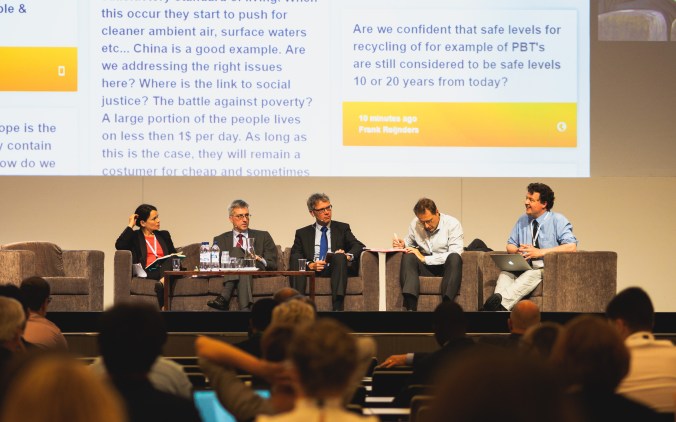
Held from 8-9 June in Helsinki, Finland, the annual Helsinki Chemicals Forum (HCF) delved into a range of topics surrounding chemicals regulation, ranging from chemicals management to sustainable development. While the focus is on European regulations, an international collection of speakers from regulatory bodies, industry associations and NGOs offered insights and information relevant to chemicals regulations in their domains.

HCF was originally created as a forum for the European Chemicals Agency (ECHA) to disseminate information about the REACH (Registration, Evaluation, Authorisation and Restriction of Chemicals) regulation that was introduced in 2007. Driven by growing concerns over chemicals in substances and their effect on the environment and human health, the regulation establishes procedures for collecting and assessing information on chemical substance hazards and risks. As always, deadlines loom for many aspects of the standard and were thus the topic of many panels.

2017 panels included the impact of chemicals legislation over the past decade; whether there is a business case for sustainable development goals; post-2020 global chemicals supply chains; new approaches to speed up chemical assessments; and, control of Substances of Very High Concern (SVHCs).

This year, speakers from the United States played a more active role than in the past. Former Assistant Administrator, Chemicals Bureau, EPA, Jim Jones participated as did Rafael Cayuela, Chief Economist for DOW; Dr. Russell Thomas the Director of National Center for Computational Technology at the EPA; and, Kevin Mulvaney, Senior Director of the American Chemistry Council (ACC).

Cayuela provided an interesting perspective for the more than 40 nationalities that attended the forum. He focused on chemicals management as a component of corporate and strategy development, and said that he believes the world is poised for disruption and that “we’re on the verge of the fourth Industrial Revolution” driven by a mass transformations going on in society and that a technological convergence will occur. Given this, he expects Dow and other major industry organizations to move forward using innovation and integration to prosper in the corporate environment.

Certainly many of ECHA’s goals are being achieved, from the development of substance information on more than 15,000 different chemicals to the recently deployed Global Harmonization System (GHS) that standardizes hazardous materials classification and labeling worldwide.   ECHA Executive Director Geert Dancet cautioned however that there is still a long way to go; that many of the dossiers are incomplete and that ECHA is striving to make it easier for industry to complete those dossiers so that substance attributes are better understood. Even so, Dancet pointed out that REACH has broken new ground in chemicals management and offered other countries a means to better understand how to limit chemical exposures.

One key goal of the regulation is to minimize chemicals’ adverse effects by driving safer usage by 2020. Prior to REACH the responsibility for doing this was with the regulators. Now, the burden of proof is with the manufacturers to prove exposure levels and how they ensure safe usage. This is a massive shift; now more than 11,500 organizations have complied with REACH. Interestingly, consumers are driving some of this compliance through boycotts of suspect products, such as toys containing lead. In response, retailers such as Walmart have told suppliers not to use certain chemicals in their products and opting not to sell products that do. This social support continues to support ECHA goals for greater chemicals transparency throughout the supply chain.

HCF 2018 will be held from 14-15 June 2018 at the Messukeskus Helsinki Convention Centre in Helsinki, Finland. Currently the 2018 program will provide panels on nanomaterials, micro-plastics in the environment, endocrine disruptors, and capacity building beyond 2020. For more information, visit http://www.helsinkicf.eu.

Posted by Helen Gillespie

A business case for sustainability

Matias LöyttyniemiA panel discussion on the business of sustainability was held at the Helsinki Chemicals Forum, June 8-9 in Helsinki, Finland. The panel, comprised of experts from around the world, discussed what efforts are underway in their countries to support sustainability relating to the use of chemicals.

Ricardo Barra, Dean with the University of Conception, in Chile, provided a snapshot of the situation in his country. The environment there is changing rapidly, at the same time poverty is decreasing rapidly. Emerging issues relating to sustainability include electronic waste, endocrine disrupting chemicals (EDCs), plastics in the environment, open burning of waste, and nanomaterials, to name a few. Chemical and waste production has been growing rapidly in Chile, outstripping the government’s ability to register the chemicals.

Qian Cheng, Deputy Head of Greenpeace East Asia in China, presented the results of tests that Greenpeace conducted near an industrial park in China, which showed the magnitude of the chemical pollution problem in China. In the study, they found a large number of hazardous chemicals (224 in all), of which 26% were subject to permit. The scale of chemical industrial production in the country is huge. For example, 18,208 of 25,000 chemical enterprises are registered to produce hazardous chemicals. Of 45,643 chemical substances registered in China, only 2,828 are being monitored. Therefore, a high proportion of chemical releases cannot be readily identified in environmental samples. And further, it makes it extremely difficult to assess the precise health and safety impact of these substances.

Timo Unger, Manager of Environmental Affairrs with Hyundai Europe, discussed how European manufacturers have reduced the environmental impact of car production over the past decade. He also outlined the challenges manufacturers face as downstream users trying to develop substitutions for hazardous substances, which can take from 3-5 years between development and testing. A project his company has started, called Global Regulatory Monitoring Project, will provide a global overview of all regulatory information. However, he commented that it would be beneficial if international organizations, such as the OECD or WTO, UN Environment or even ECHA, would assist in such projects.

Finally, Hartvig Wendt, Executive Director, Head Policy Centre Sustainability with CEFIC in Belgium, pointed to Europe’s declining importance in the global chemicals industry, and asked if after 10 years of REACH, a purely regulating scheme is the best path for the future. He summed up by pointing to a potential for Europe to put more emphasis on innovation, possibly through an incentive scheme rather than a regulatory scheme, as a means of achieving the goal of chemical safety.

Posted by Leslie Burt

Revolutionary Chemical Regulations Celebrate Milestone

hcf-2017-helsinki-chemicals-forum-circular-economy.jpg

Speakers from the chemical industry, governments and organizations shared minds and viewpoints at the Helsinki Chemicals Forum.

Celebrating the 10th anniversary of the REACH regulations, keynote speakers and panelists at the recent Helsinki Chemicals Forum (HCF) examined what the chemicals legislation has accomplished so far.

The REACH regulations have two main goals. The overriding aim is to protect human health and the environment by identifying chemical substances and regulating them through a four-part process of registration, evaluation, authorization and restriction. The second goal is to spur innovation and competitiveness in the European Union’s chemicals industry.

So far, over 11,500 companies have complied with the legislation with over 60,000 registrations.

When it was enacted, “the REACH regulation was revolutionary in worldwide chemicals policy,” said Geert Dancet, ECHA’s Executive Director, in a keynote address at HCF. “Before REACH, the responsibility was with the regulators to prove that a substance was dangerous – a situation that resulted in approximately 140 existing substances being regulated over 14 years.

“After REACH, the burden of proof is now with the companies who make chemicals,” he added. “They have to register their chemicals, documenting their hazards, the likely levels of exposure and the purposes for which they are used. And companies also need to demonstrate how they can be used safely.

“The evidence shows that it has not been easy, but it is being achieved.”

Challenges are still ahead. Bjorn Hansen, unit head with the European Commission, noted that many dossiers are still not compliant, and testing has proved to be very difficult due to animal protection provisions in REACH. Alternative test methods are being developed, but have taken much longer than originally anticipated. And because of the incomplete dossiers, few substances of very high concern have as yet been identified.

Jan Wijmenga, with The Netherlands government’s ministry of infrastructure and environment, said that although more focus is needed on new substances such as nanomaterials, REACH has been successful so far in making more data available on substances. Looking down the road, he said REACH needs to be connected with other legislation, such as that related to occupational health and safety, waste and water, in order to support the development of the circular economy.

Andrea Paetz, Director of Regulatory Policy with Bayer AG, says that REACH has addressed many of the weaknesses of previous legislation, although its switch in burden of proof was very new to the chemical industry. So far, from the industry perspective, under REACH, data collection is more systematic and the fact that the regulations apply uniformly throughout the EU is very positive. Challenges for industry, particularly SMEs, include the amount of work in collecting data, making updates, and improving dossiers.

Environment Canada’s Jake Sanderson, provided an interesting perspective on the impact of REACH on government policy outside the EU. He said that in 2006, Canada’s existing hazardous chemicals program had reviewed a total of 69 substances over 10 years – a very slow process. Staff looked at REACH as it was being introduced, and watched how it was received by industry in Europe. In addition, they also considered the legislation across the border in the United States. Readiness and political will came together, and Canada’s new Chemicals Management Plan was launched in December 2006. Sanderson said that key priority areas included having a government-wide approach, targeting chemicals of higher concern, having transparent, predictable timetables, integrating research and monitoring programs to align with the priorities, looking at international collaborations, and enhanced engagement with various groups through the supply chain. As a result, 2,800 assessments were completed in 10 years, 370 substances were found to be harmful and 80 risk management plans were created. Next steps, beyond 2020, include more cross-cutting issues, such as pharmaceuticals in the environment.

Looking down the road beyond REACH’s first 10 years, the panel members agreed that it would be ideal to be able to share information internationally by using existing facilities and tools that have already been developed.

Posted by Leslie Burt