The European Chemicals Agency (ECHA) has announced that it will support the European Commission and Member States to develop risk profiles for methoxychlor and Dechlorane Plus®. This contributes to global work to eliminate or limit the use of the most hazardous persistent organic pollutants.
In early October 2019, the Organic Pollutants Review Committee (POPRC) agreed that methoxychlor (EC 200-779-9, CAS 72-43-5) and Dechlorane Plus® (EC 236-948-9, CAS 13560-89-9) fulfill the screening criteria as persistent organic pollutants (POPs). Together with the Commission, ECHA will support the committee in the preparation of risk profiles for these two substances and will launch a public consultation on the drafts in early 2020.
If the POPRC adopts the risk profiles, it will conduct risk management evaluations and then eventually recommend lisitng these substances as persistent organic pollutants in the Stockholm Convention. Listing under this convention would either result in their worldwide elimination or in the strict restriction of their production and use.
Dechlorane Plus® is mainly used as a flame retardant and has been identified as a substance of very high concern (SVHC) under REACH. Methoxychlor is a pesticide and its use in the EU has already been banned since 2002. Both substances have adverse effects to humans and the environment.
As of July 2019, ECHA supports the Commission and the Member States to identify and propose new POPs from the EU to the Stockholm Convention.
The Persistent Organic Pollutants Review Committee (POPRC) is a subsidiary body to the Stockholm Convention under the United Nations.
For details, visit echa.europa.eu.
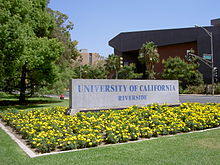 The U.S. Environmental Protection Agency (EPA) has awarded $849,811 to University of California Riverside as part of a total of $4.25 million in funding to five universities to research the development and use of alternative test methods and strategies that reduce, refine and/or replace vertebrate animal testing. Furthering these efforts, EPA Administrator Andrew Wheeler signed a memo titled, “Directive to Prioritize Efforts to Reduce Animal Testing.”
 Several new features and improvements are now publicly available in the European Chemical Agency (ECHA) chemicals database. These include new information in substance Infocards, quick links to deeper datasets for each substance, and more visibility on nanomaterials.
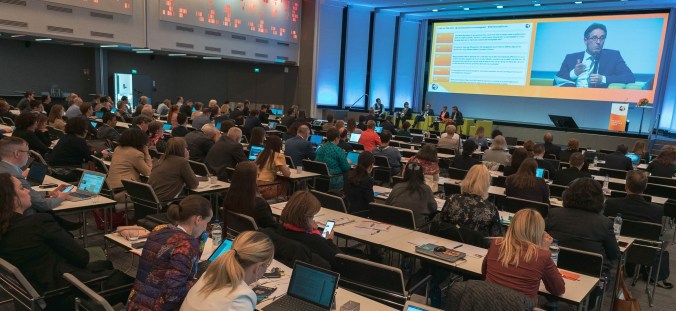 A stunning 8.3 billion tonnes of plastics produced since early 1950s. A miniscule amount of this plastic — created with non-renewable resources — is recycled or burned, and mostly ends up in dump sites. One million plastic bottles purchased every minute around the world. Jacob Duer, chief of the Chemicals and Health Branch with UN Environment Programme opened a session on plastics and the circular economy at the 2019 Helsinki Chemicals Forum on May 24 with these grim facts.
 The executive director of the European Chemicals Agency (ECHA), Bjorn Hansen, spoke at two key conferences in Helsinki this week and provided participants with an update on the agency’s activities and chemicals regulations. He was keynote speaker both at the ECHA Conference on May 22, and the Helsinki Chemicals Conference (HCF) the following day.
 Finnish companies Neste and VTT have signed cooperation agreements aimed at strengthening expertise in the bio and circular economies as well as developing cleaner fuel solutions. The agreements relate to two separate research projects in Finland — the first to a testing facility being built by Neste in Kilpilahti, Porvoo, Finland and the second to a catalytic processes project at VTT’s Bioruukki pilot centre in Espoo, Finland. The agreements will allow Neste and VTT to use these research infrastructures in their future projects.
 Chemical-Matters