ECHA conference brings together 250 stakeholders

ECHA photo.croppedAround 250 stakeholders including national authorities, industry associations, companies, NGOs and academics gathered at the headquarters of the European Chemicals Agency on May 22 for the 2019 ECHA Conference. The theme of the conference was chemical safety, and was divided into three areas – improving compliance of registration data, tackling substances of concern and improving safe use of chemicals.

Mike Rasenberg, head of computational assessment unit at ECHA discussed strategies for increasing efficiency in screening substances by strategic groupings. Ofelia Bercaru, head of hazard IV unit, ECHA, said that over the past year, EHCA staff have checked over 2700 dossiers and they have evaluated 25% of substances registered above 1000 tonnes. She noted that the reasons for non-compliance include the waiving of data requirements, adaptations not justified, insufficient documentation (for example, inadequate detail to support an independent assessment). Action has been taken to support compliance, such as providing evaluation reports that include advice. These evaluation decisions are available on ECHA website. The number of compliance checks will be increased by ECHA, and she pointed out that it is important for industry to expect the checks to increase.

In the next session, looking at the challenges in tackling substances of concern, ECHA’s Sandrine Lefevre-Brevart presented a case study on microplastics. She discussed the proposed restriction being developed for microplastics, which includes agreeing upon a harmonized definition of microplastics, regulating use and instructions for use. The restriction is still a proposal and public consultations are underway until September 20: https://echa.europa.eu/restrictions-under-consideration/-/substance-rev/22921/term.

In summary, ECHA’s deputy executive director Jukka Malm, said ECHA is working to improve the consistency and quality of the work, still hampered by unreliable data and lack of data. Compliant data is the foundation of safe use, and will be a high priority for ECHA in the upcoming period.

Reported by Leslie Burt, Chemical Matters

EPA Releases Update to TSCA Inventory List of Active Chemicals

chemicals-bluegreenThe U.S. Environmental Protection Agency (EPA) has released an update of the Toxic Substances Control Act (TSCA) Inventory listing the chemicals that are actively being manufactured, processed or imported in the United States for a nonexempt commercial purpose during the 10-year “lookback” period ending on June 21, 2016, the enactment date of the 2016 TSCA amendments.


The update indicates that less than half of the total number of chemicals on the current TSCA Inventory (47 percent or 40,655 of the 86,228 chemicals) are currently in commerce, enabling the EPA to focus risk evaluation efforts on currently marketed chemicals. Further, more than 80 percent (32,898) of the chemicals in commerce have identities that are not Confidential Business Information, increasing public access to additional information about them. For the less than 20 percent of the chemicals in commerce that have confidential identities, EPA is developing a rule outlining how the Agency will review and substantiate all CBI claims seeking to protect the specific chemical identities of substances on the confidential portion of the TSCA Inventory.

From August 11, 2017, through October 5, 2018, chemical manufacturers and processors provided information on which chemicals were manufactured, imported or processed in the U.S. during the prior ten years. The agency received more than 90,000 responses from manufacturers, importers and processors.

For more information, visit https://www.epa.gov/tsca-inventory/tsca-inventory-notification-active-inactive-rule.

Posted by Helen Gillespie, Chemical-Matters.com

EPA to Hold Webinar on TSCA Inventory Reporting

The U.S. Department of Environmental Protection (EPA) is hosting webinar on Wednesday, March 13, 2019, from 1-4 PM EDT, to assist importers, manufacturers, and processors, with future reporting requirements under the Toxic Substance Control Act (TSCA) Inventory Notification (Active-Inactive) final rules.

Almost half of chemical substances found on the TSCA Inventory have been reported as ‘active’ by importers, manufacturers or processors. A substance is not designated as an ‘inactive substance’ until 90 days after EPA publishes the initial version of the Inventory with all listings identified as active or inactive.

Importers, manufacturers and processors should be aware that if there is a substance that is listed as ‘inactive’ that is currently being manufactured or processed, they have 90 days to file an NOA Form B so that they can continue their current activity. Manufacturers and processors that intend to manufacture or process an ‘inactive’ substance in the future must submit an NOA Form B before they start their activity.

The webinar will include an overview of filing a Notice of Activity Form B, a demo of the electronic reporting application, and time for questions and answers. Registration for the webinar is not required.

For details, visit www.epa.gov/tsca-inventory .

Reported by Helen Gillespie, Chemical-Matters.com

House Bill Reauthorizes CFATS Security Program

On January 9, the House passed a fast-track legislation to extend the US Department of Homeland Security’s Chemical Facility Anti-Terrorism Standards (CFATS) for two years. CFATS was scheduled to expire this month.

The CFATS program is designed to ensure that facilities that utilize, store and distribute chemicals have security measures in place to reduce the risk of certain hazardous chemicals from being exploited in an attack. Under CFATS, DHS requires facilities determined to be high-risk to develop, implement and report one of two types of security plans: a Site Security Plan (SSP) or an Alternative Security Program (ASP).

For details, visit www.dhs.gov/chemicalsecurity

Reported by Helen Gillespie, Chemical-Matters.com

US EPA Appoints Alexandra Dunn to Chemical Safety Office

alexandra-dunn

The US Environmental Protection Agency’s (EPA) Office of Chemical Safety and Pollution Prevention (OCSPP) has a new director: Alexandra Dunn. Nominated by President Donald J. Trump to serve as assistant administrator last Fall, Ms. Dunn previously served as regional administrator for EPA’s Region 1 office in Boston, MA, as was endorsed by both environmental groups and the chemical industry. Her appointment was confirmed by the Senate on January 2.

Prior to joining EPA, Ms. Dunn served as executive director and general counsel for the Environmental Council of the States (ECOS), a national nonprofit, nonpartisan organization committed to helping state agencies improve environment outcomes for Americans. While at ECOS, Ms. Dunn helped state governments improve water infrastructure, reduce air pollution, clean up contaminated sites, manage chemical safety, and enhance economic development. Before joining ECOS, Ms. Dunn was executive director and general counsel for the Association of Clean Water Administrators.

Ms. Dunn has also been published in the areas of the ethics of community advocacy, environmental justice, urban sustainability, water quality, cooperative federalism, and the Clean Water Act. Previously, she taught environmental justice and human rights and the environment as dean of Environmental Law Programs at the Elisabeth Haub School of Law at Pace University. She also taught at Catholic University of America’s Columbus School of Law, where she served as faculty advisor to the student Environmental Law Society. Ms. Dunn most recently taught environmental justice as an adjunct associate professor of law at American University’s Washington College of Law.

Last year, Ms. Dunn was elected to the Board of Regents of the American College of Environmental Lawyers, and she served on the executive committee and board of directors of the Environmental Law Institute. She has chaired the American Bar Association’s (ABA) section of Environment, Energy, and Resources, as well as its World Justice Task Force, and she served on the ABA Presidential Task Force on Sustainable Development.

Reported by Helen Gillespie, Chemical-Matters.com

Helsinki Chemicals Forum Announces Themes for 2019

HCF brochure image

Stakeholders connected with the global chemicals industry will gather in Helsinki, Finland on 23-24 May this year to attend the 11th annual Helsinki Chemicals Forum (HCF).

This year’s HCF will cover five themes: risk management options for chemicals of concern, the grouping of chemical substances, measuring the performance of different chemical management systems, plastics and circularity, and the quality of and access to data on chemicals.

A key gathering for chemicals safety professionals, HCF promotes chemicals safety and chemicals management globally. The two-day event is built around high-profile panels and keynote presentations as well as related debates. It is organized by the Chemicals Forum Association in co-operation with the European Chemicals Agency (ECHA), the European Commission, the European chemicals and metals industry, Associations CEFIC and Eurometaux, the City of Helsinki, the Chemical Industry Federation of Finland and the University of Helsinki. The event is held at at Messukeskus Helsinki (Helsinki Convention Centre).

This year, Jan Vapaavuori, the mayor of Helsinki, will open the forum. He will be joined by Bjorn Hansen, executive director of ECHA and Daniel Calleja, director general for environment with the European Commission, in presenting keynote speeches.

Panel 1 will explore the pros and cons of various risk management options currently being used by authorities around the world to regulate substances of very high concern. Panel moderator will be Otto Linher, the deputy head of the EU’s REACH Unit.

Regulators and stakeholders have expressed growing interest in grouping similar chemicals in order to speed up risk assessment and management and to prevent inadvertently substituting one problem chemical with another. But there is no consistency in the way groupings are carried out globally. This will be the theme of panel 2, moderated by science editor Andrew Turley from Chemical Watch Magazine.

How to measure the performance of different chemical management systems in different parts of the world will be the focus of panel 3. Panelists will probe what are meaningful indicators for measuring success, the cost of action or inaction, and how to assess value for money of the different regulatory systems, among other questions. The panel will be moderated by Eeva Leinala, principal administrator with the OECD.

The global hot topic of plastics and circularity will be discussed the panel 4. The panelists will be drawn from various sides of the debate – plastics production, policy makers, users of plastics, and the Civil Society Organization representing advocacy. Moderator will be Jakob Duer, chemicals and health branch chief from the UN Environment.

Panel 5 will deal with the quality of and access to data on chemicals. The amount of data being generated on chemical substances keeps rising, although the quality of the data is of varying or unknown quality. This creates challenges relating to competing demands for this data, from actors with competing interests. The discussion will be moderated by Hugo Waeterschoot from Eurometaux.

On the afternoon of Saturday 25 May, HCF will organize a visit to the Fortum Waste Solutions plant in Riihimäki, which is one of Europe’s most advanced recycling facilities.

A detailed program will be available at http://www.helsinkicf.eu/programme in January 2019.

Two related events are also taking place in Helsinki before and after HCF. On 21-22 May, ECHA will host REACH/CLP Stakeholder Days at its offices in Helsinki. And on 26-30 May, the Society of Environmental Toxicology and Chemistry SETAC will hold its annual conference at Messukeskus Helsinki. Participants to those events will be encouraged to join all or part of the HCF and vice-versa.

Reported by Leslie Burt, Chemical Matters

EPA Releases First TSCA Risk Evaluation: Pigment Violet 29

pv29

On November 15, US Environmental Protection Agency (EPA) announced the release of the first of its draft risk evaluations for the first 10 chemicals being reviewed under the Toxic Substances Control Act (TSCA).  The draft risk evaluation is for a chemical called Pigment Violet 29 (PV29).  One notable aspect of this chemical is how few hazard studies have been conducted.

Pigment Violet 29 (Anthra[2,1,9-def:6,5,10-d′e′f′] diisoquinoline-1,3,8,10(2H,9H)-tetrone) (pigment violet 29) is a perylene derivative used to color materials and as an intermediate for other perylene pigments. The pigment is utilized as an intermediate to create or adjust the color of other pigments, as well as in commercial paints, coatings, plastics, and rubber products. C.I. Pigment Violet 29 is an organic pigment that has a low solubility, low volatility, is expected to be highly persistent and has low bioaccumulation potential in fish and other animals.

Information about the problem formulation and scope phases of the risk evaluation for this chemical is available at https://www.epa.gov/assessing-and-managing-chemicals-under-tsca/risk-evaluation-pigment-violet-29-anthra219-def6510.

Industry watchdogs have previously voiced this concern during public comment periods, noting that PV29 lacked data on chronic effects.  PV29 does not have the minimum amount of information deemed by international authorities as necessary to conduct even a screening-level assessment of a chemical’s hazards, let alone a full risk evaluation.  Unfortunately, EPA has not taken steps to fill these major data gaps and as a result the new draft includes no additional data. Despite the lack of data, EPA has declared the chemical safe.

EPA is seeking public comment on the draft risk evaluation for PV29 to determine whether it presents an unreasonable risk to health or the environment under the conditions of use. EPA is also submitting these same documents to the TSCA Science Advisory Committee on Chemicals (SACC), which will peer review the draft risk evaluation. Comments need to be submitted no later than January 14, 2019. Unfortunately the current government shutdown impacts this action.

Posted by Helen Gillespie

Canadian Ban on Asbestos Comes Into Force

Asbestos sign-3789310_640

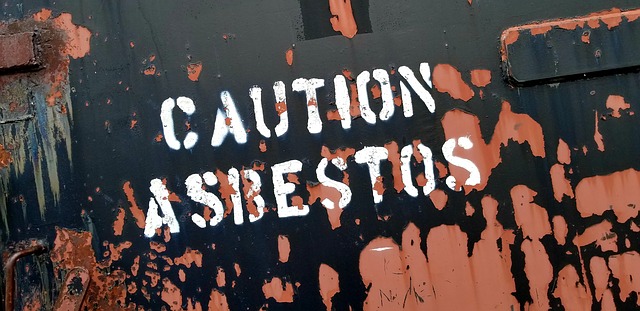
New rules have come into effect in Canada that ban the import, sale and use of asbestos, as well as the manufacturing, import, sale and use of asbestos in most products containing asbestos.

In force as of December 30, 2018, the ban applies to products that are already in a company’s inventory and prevent businesses from acquiring any new products with asbestos. In addition, the export of asbestos and asbestos-containing products is now prohibited, with a limited number of exceptions.

The regulations do not apply to residues left from mining asbestos. However, these asbestos-mining residues cannot be sold for use in construction or landscaping without provincial authorization, and they cannot be used to make a product that contains asbestos. The mining of asbestos in Canada ceased in 2011.

Asbestos was declared a human carcinogen by the World Health Organization’s International Agency for Research on Cancer in 1987, and can cause diseases including asbestosis, mesothelioma, and lung cancer.

“When it comes to asbestos, the science is clear: breathing in asbestos fibres can cause serious health problems, including cancer,” said Ginette Petitpas Taylor, federal minister of health, when the ban was announced in October 2018. “These regulations will help protect Canadians by ensuring that there is no market for asbestos or products containing asbestos, in Canada.”

Reported by Leslie Burt, Chemical Matters

ECHA Announces Strategic Plan for Chemical Information in Europe

Before ECHA’s current multi-annual work program ended in 2018 — the same year which marked the third registration deadline under REACH — ECHA worked closely with its partners and stakeholders to define future strategy. The result was the adoption of ECHA’s Multi-Annual Strategy for 2019-2023, which defines ECHA’s priorities and implementation plans, during the December Management Board meeting.

Sharon McGuinness, the Chair of the Management Board, states that “This strategy goes a long way in preparing ECHA for the next five years but also for the long-term future – with many challenges ahead such as the new Financial Framework of the EU and the UK withdrawal from the Union. We are entering a period where ECHA will play a key role in implementing the recommendations of the Commission’s REACH Refit evaluation, as well as take on new tasks. It is very important to have clarity on our mission and have the right priorities in place, so that all our stakeholders can rely on them.”

The new strategy identifies three strategic priorities:

  1. Identification and risk management of substances of concern.
  2. Safe and sustainable use of chemicals by industry.
  3. Sustainable management of chemicals through the implementation of EU legislation.

Bjorn Hansen, ECHA’s Executive Director, states the following: “Our new strategic priorities lead us to making the best use of our unique source of information on chemicals in Europe and to focus our efforts where we can provide the most impact. This also means an increased focus on ensuring compliance with EU chemicals legislation. We have the right competences to respond to challenges. We aim to become more efficient in the next five years, which will also be supported by the new organisational set-up of ECHA, to be effective from January onwards.”

A PDF of the 2019-2023 strategic plan is available at: https://echa.europa.eu/documents/10162/26075800/echa_strategic_plan_2019-2023_en.pdf/3457ccff-7240-2c1f-3a15-fa6e5e65ac56

ECHA Releases Video Titled How Brexit Impacts your Chemical Company

echa-brexit

ECHA has published a YouTube video addressing how Brexit impacts chemical companies in the EU and in the UK. The withdrawal of the United Kingdom from the European Union (EU) takes effect from 30 March 2019. According to the video, “if you work with chemicals and your company is established in the EU-27/EEA, you will be affected whenever your supply chains as a customer or supplier extend to the UK.”

Both the video and ECHA’s web site provide advice on how to be prepared for the UK’s withdrawal.