ECHA, Cefic Sign Joint Statement on REACH Implementation

cefic_echa_sign joint statement

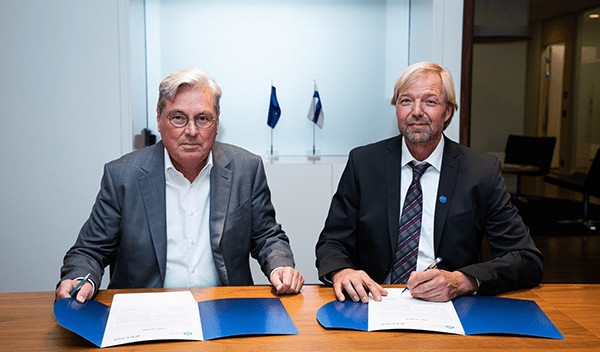
Cefic president Hariolf Kottmann and ECHA’s executive director Bjorn Hansen sign a joint statement outlining the future cooperation of the two organizations. (Image courtesy of ECHA.)

Now that the third and final registration phase for existing substances under the EU’s chemicals legislation has come to a close, ECHA and the European Chemical Industry Council (Cefic) have agreed on plans to cooperate on REACH’s implementation.

A formal agreement was signed today — a commitment from both industry and ECHA to focus on improving the scientific assessment of some substances or groups of substances, further enhancing safety information and its communication across the supply chain.

“We welcome this cooperation very much as it shows that together we can make REACH work to the benefit of industry and ECHA, and the wider stakeholder base,” said Marco Mensink, Cefic’s director-general. “Industry will help ECHA to improve the quality of dossiers to help monitoring and enforcement and to improve the scientific quality of the process.”

The joint statement “shows European industry’s commitment to REACH and ECHA’s commitment to work with industry,” said Bjorn Hansen, ECHA’s executive director. “The commission has asked us in their recent report to work with industry to increase efficiencies in implementing REACH and this is a step in doing so. As ECHA is committed to openness and transparency, this work will be done in close collaboration with Member States and our other accredited stakeholder organizations, representing NGOs, trade unions, consumers and academia.”

The two organizations have also agreed to work jointly to solve scientific and technical challenges by facilitating technical discussions between experts and to improve the transparency on the quality of dossiers.

Posted by Leslie Burt, Chemical Matters

Forum to Debate Critical Health and Environmental Issues

OLYMPUS DIGITAL CAMERAHighly topical issues, including the risks posed by microplastics, endocrine disruptors and nanomaterials to human health and the environment, will be probed at the upcoming Helsinki Chemicals Forum (HCF 2018), being held from June 14 and 15 at the Messukeskus in Helsinki, Finland.

The two-day forum includes four expert panels.

A panel hosted by the UN Environment Programme (UNEP) will discuss the promotion of chemical safety in developing countries. The gap in regulatory risk management between OECD countries and developing nations is growing. Notwithstanding, much of the chemical industry has moved from OECD countries to developing economies, primarily to Asia. The SAICM process that the UNEP promotes is supporting developing countries to start their own chemicals risk management. The panel will include experts from Argentina, Sweden, China and UNEP, as well as from the European Bank for Reconstruction and Development EBRD.

At a panel hosted by the OECD, the focus will be on the prioritization of chemicals. The wider distribution of information on chemicals and the international harmonization of regulation are increasingly important. Each regulatory authority wants to identify and reduce the risks from the most harmful chemicals but questions have been raised as to whether countries can cooperate and learn more from each other. The panel will include experts from the US, Brazil, Sweden and the European Chemicals Agency (ECHA).

Endocrine disruptors have been discussed in the public sphere for some two decades. Much research has been conducted on this category of harmful substances, and some legislation has advanced taking advantage of scientific results. Despite this, many parties feel the status quo is not acceptable. In addition, this type of chemical also presents a great challenge to risk communication. HCF organizers have assembled an exciting line-up of policymakers and influencers from the European Commission and Parliament, media, NGOs as well as industry representatives and researchers to probe the critical issues connected with endocrine disruptors.

Microplastics are becoming more topical as evidence builds up that they are polluting rivers and oceans around the world. They result from both the fragmentation of plastic waste into smaller particles as well as from intentionally produced microscopic plastics. The current definitions and regulations on the issue are inadequate. Many countries and international organizations are now monitoring the problem. Research is also underway on the risks posed by microplastics entering the human body. Panel members from Europe, the US and Australia will provide an extensive global snapshot of the problem, and of regulation requirements and models.

The final section of the forum will be a debate on nanomaterials. This issue has been a difficult area for legislators to handle. The forum will challenge debaters to consider the management of risks caused by nanomaterials, by means beyond legislation. A representative of an international NGO from Europe and a representative of the industry from the US will debate the issue. The debate will be moderated by an Australian expert with experience of both industry and research in the field.

Since it launched over a decade ago, the Helsinki Chemicals Forum has grown into the leading international event in chemical safety. The Forum is bringing a rising number of world-leading experts in the sector to Helsinki each year. The presentations and conclusions of the Forum are compiled into a Conference Report to assist decision-makers. The objective of the forum is the global development and harmonization of legislation on chemical safety, and the distribution of information within the field.

Program and registration details for the Helsinki Chemicals Forum 2018 are available at www.helsinkicf.eu.

Posted by Leslie Burt
EPA Proposes Fees Rule, the Final of Four Framework Rules for EPA Chemical Safety Evaluations Under TSCA

chemicals-bluegreen

On February 8, the U.S. Environmental Protection Agency (EPA) met an important milestone and proposed a fees rule under the amended Toxic Substances Control Act (TSCA), the Frank Lautenberg Chemical Safety for the 21st Century Act.

“EPA has moved swiftly to implement the amended TSCA requirements. Our proposed TSCA fees rule ensures we have sufficient resources to review chemicals for safety with the highest scientific standards,” said EPA Administrator Scott Pruitt.

Under the Lautenberg Chemical Safety Act, the proposed fees on certain chemical manufacturers, including importers and processors, would provide a sustainable source of funding to defray resources that are available for implementation of new responsibilities under the amended law.

These fees to be collected from certain chemical manufacturers and importers, including processors, would go toward developing risk evaluations for existing chemicals; collecting and reviewing toxicity and exposure data and other information; reviewing Confidential Business Information (CBI); and, making determinations in a timely and transparent manner with respect to the safety of new chemicals before they enter the marketplace.

EPA has finalized three important rules under the Lautenberg Chemical Safety Act and is now taking action to move the fourth to completion. EPA is working diligently to implement the new law, the first major update to an environmental statute in 20 years, and get the most modern and safe chemicals to market quickly in order to provide regulatory certainty for manufacturers and confidence for American consumers.

The fees rule is the final of four framework rules under the Lautenberg Chemical Safety Act, incorporating input received at an August 11, 2016 public meeting. Under the proposed rule, affected businesses would begin incurring fees on October 1, 2018 and small businesses would receive a substantial 80 percent discount on their fees for new chemical submissions.

The 60-day comment period will open upon the forthcoming publication of the proposed fees rule in the Federal Register. A prepublication version of the proposed rule is available at: https://www.epa.gov/assessing-and-managing-chemicals-under-tsca/frank-r-lautenberg-chemical-safety-21st-century-act-5

For more information on TSCA implementation, visit: https://www.epa.gov/assessing-and-managing-chemicals-under-tsca/frank-r-lautenberg-chemical-safety-21st-century-act-5

EPA Publishes Annual Toxics Release Inventory Report and Analysis

On January 30, the U.S. Environmental Protection Agency (EPA) released its 2016 Toxics Release Inventory (TRI) National Analysis. The publicly available database shows that industrial facilities continue to reduce the releases of TRI chemicals through pollution reduction activities.

In 2016 according to the National Analysis, 87% – of the nearly 28 billion pounds of chemical waste – was not released into the environment due to the use of preferred waste management practices such as recycling, energy recovery, and treatment. These industrial facilities also reported implementing 5,900 new source reduction activities that eliminated or reduced the creation of chemical waste.

Coal- and oil-powered electric utilities and paper manufacturing facilities reported the greatest reductions, but nearly every sector reduced its air releases. Since 2006, air releases of TRI-listed chemicals fell 58% (at industrial facilities submitting data to the program).

Hydrochloric acid, sulfuric acid, toluene, and mercury were among chemicals with significantly reduced air releases. This trend is helping protect millions of families and children from these harmful pollutants. During the ten-year period, combined hydrochloric acid and sulfuric acid air releases declined more than 573 million pounds, and mercury and mercury compounds declined more than 89,000 pounds at TRI-covered facilities.

Under the Emergency Planning and Community Right-to-Know Act (EPCRA), facilities must report their annual releases of TRI chemicals for the prior calendar year to EPA by July 1. EPA, states, and tribes receive TRI data from facilities in industry sectors such as manufacturing, metal mining, electric utilities, and commercial hazardous waste management. The Pollution Prevention Act also requires facilities to submit information on pollution prevention and other waste management activities of TRI chemicals.

The National Analysis increases the transparency of the TRI Program and promotes user engagement and exploration of the annual TRI data. This year, the interactive website includes expanded access to tribal information, a closer look at off-site transfers of TRI chemicals, highlights of the pharmaceutical manufacturing sector’s pollution prevention achievements, and a discussion of the TRI Program’s role as a model in the international community.

The database includes easily accessible tools to learn more about the practices implemented to both manage waste and reduce pollution at nearly 22,000 facilities that submitted TRI data for calendar year 2016. EPA encourages facilities to learn from their counterpart’s best practices and adopt additional methods for reducing pollution.

To access the 2016 TRI National Analysis, including local data and analyses, visit www.epa.gov/trinationalanalysis

Geert Dancet Becomes Secretary General of Helsinki Chemicals Forum

ECHA / Geert DancetGeert Dancet has been appointed Secretary General of Helsinki Chemicals Forum from 1 February 2018 onwards. The next Helsinki Chemicals Forum will take place from 14 to 15 June 2018. It is the 10th anniversary of the event.

Helsinki Chemicals Forum is the leading international special event for chemical safety and chemical management. The event attracts chemical safety experts and decision-makers to Messukeskus in Helsinki every year. As Secretary General, Dancet is responsible for developing the event and assembling a programme of upscale moderated panels, discussions and keynote presentations. Previously, Geert Dancet worked as the Executive Director of The European Chemicals Agency ECHA.

“I am glad that I can continue working with chemical safety,” says Dancet. “In providing the coordination of the annual conference, I will benefit from my extensive expertise and network from my years at ECHA and the European Commission. My aim is to develop the Helsinki Chemicals Forum into an even stronger and globally acknowledged chemical safety event”.

Geert Dancet was interim Executive Director in 2007 and became the first elected Executive Director of the European Chemicals Agency (ECHA) in January 2008. Under his leadership, the Agency successfully managed all regulatory processes of the REACH and CLP regulations. His mandate ended in 2017. Before arriving in Finland, he spent more than 20 years in the European Commission in different positions.

The programme for the Helsinki Chemicals Forum has been prepared by the previous Secretary General – Hannu Vornamo – and the international Programme Committee, which has representatives from the European Commission, the European Chemicals Agency (ECHA), the Organisation for Economic Co-operation and Development (OECD), Environment Canada, the European Chemical Industry Council (CEFIC), the American Chemistry Council (ACC), the German Chemical Industry Association (VCI), the Center for International Environmental Law (CIEL, a major global NGO) and Chemical Watch (a leading news service in the field). The Helsinki Chemical Forum thanks Hannu Vornamo for his 10 years of service as Secretary General and is happy to announce that he will now join the Advisory Board.

The Helsinki Chemicals Forum is organised by the Chemicals Forum Association in co-operation with the European Chemicals Agency (ECHA), the European Commission, The European Chemical Industry Council CEFIC, the City of Helsinki, the Chemical Industry Federation of Finland and the University of Helsinki. This event will be held for the 10th time in Messukeskus, Helsinki from 14 to 15 June 2018.

Chemical Management & Regulations Events

Helsinki Chemicals Forum

The Helsinki Chemical Forum is the leading global conference on the REACH regulation.

GlobalChem
The American Chemistry Council (ACC) will host the 2018 GlobalChem conference from February 28 through March 2 at the OMNI Shoreham Hotel in Washington, DC.

5th Annual Legal, Regulatory & Compliance Forum on Cosmetics and Personal Care Products
The American Conference Institute will host the 5th Annual Legal, Regulatory & Compliance Forum on Cosmetics and Personal Care Products from March 5-7 at the Park Lane Hotel in New York, NY.

Food Contact Regulations USA
ChemicalWatch will host the 2018 Food Regulations USA conference from March 8-9 at the Renaissance Arlington Capital View hotel in Arlington VA just outside of Washington, DC.

ToxExpo
The Society of Toxicology (SOT) 57th annual meeting and ToxExpo will be held from March 11-15 at the Henry B. Gonzalez Convention Center in San Antonio, TX.

SETAC Europe
The 28th annual meeting of SETAC Europe will be held from May 13-17 at the Rome Convention Centre The Cloud in Rome, Italy.

ChemSpec Europe
The 33rd International Exhibition for Fine and Specialty Chemicals, ChemSpec Europe 2018, will be held from June 20-21 2018 at the Koelnmesse conference centre in Cologne, Germany.

Helsinki Chemicals Forum
Organised by the Chemicals Forum Association in cooperation with the European Chemicals Agency ECHA, the European Commission, the European Chemicals Industry Council CEFIC, the city of Helsinki, the Chemical Industry Federation of Finland and the University of Helsinki, the 11th annual Helsinki Chemicals Forum will be held from June 14-15 at the Messukeskus Helsinki in Helsinki, Finland.

HCF 2018 Program to Tackle Hot-button Issues

OLYMPUS DIGITAL CAMERASome of the most pressing issues facing the global chemical industry will be examined at the Helsinki Chemicals Forum on June 14-15, 2018 in Helsinki, Finland. A key gathering for chemicals safety professionals, HCF is an independent forum that aims to promote chemicals safety and chemicals management globally.
The program for 2018 was recently published. Key-note speakers and expert panelists will probe hot-button issues such as the best way to communicate risk of endocrine disruptors in the social-media era, the challenges faced in harmonizing chemical regulations around the world, problems with micro-plastics in the environment and regulation vs product stewardship in managing nanomaterials.

Last year’s event attracted 189 delegates from 39 countries. It celebrated the 10th anniversary of the EU’s REACH regulation, and took a look at what chemicals legislation has achieved over the past decade, among other topics.

The 2018 program can be viewed on HCF’s website.

Posted by Leslie Burt

Finnish Safety and Chemicals Agency (Tukes) Selects Innofactor’s Chemical Data Management System

The Finnish Safety and Chemicals Agency (Tukes) has selected Innofactor in a public procurement competition as the provider for their chemical data digital management (KemiDigi) system and related services. Innofactor is a leading Nordic provider of digitalization and cloud solutions that serves over 1,500 commercial, public, and third sector organizations. The system delivery consists of the delivery project for the new system, the conversion of the current system, and maintenance and support services and other specialist services.

Tukes is a licensing and supervisory authority that promotes the safety and reliability of products, services and industrial activities in Finland. The agency is tasked with the surveillance of products, services and production systems within its fields of operation, and enforces the relevant legislation.  Tukes is the Finnish national agency responsible for the chemicals surveillance and an important partner of the European Chemicals Agency (ECHA), in particular as to the enforcement of the REACH and CLP Regulations of the European Union.

For details, visit innofactor.com.

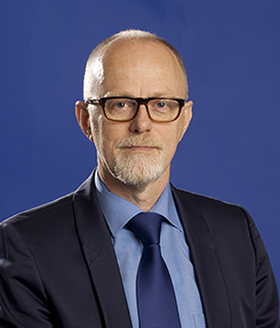
Bjorn Hansen Selected as ECHA’s New Executive Director

bjorn_hansen_lowresAs part of the appointment procedure, Bjorn Hansen will make a statement before the European Parliament and answer questions of its Members. The contract signature is scheduled for the Management Board meeting of 14-15 December 2017.

Henrik Søren Larsen, Deputy Chairman of ECHA’s Management Board: “We selected an excellent candidate and look forward to hearing the European Parliament Committee’s views. Our assessment benefitted from the very good job the Commission did to provide us with such high quality candidates”.

In June 2003, Bjorn joined the Chemicals Unit of DG Environment in Brussels, where he worked as a head of unit. From 2007 to 2008, he was seconded to ECHA as the Director of Operations and has been involved in the development of REACH from its very early days.

Before joining DG Environment, he worked as an area coordinator for the existing substances team at the European Chemicals Bureau at the Commission’s Joint Research Centre in Ispra, Italy.

Bjorn obtained his PhD in Probability Theory from the Technical University of Eindhoven in 1988.

He was one of the candidates shortlisted by the European Commission after an open competition, and who were interviewed by the Management Board for the post.

Bjorn’s selection follows that of Geert Dancet, ECHA’s current Executive Director, who was appointed as ECHA’s first Executive Director of in January 2008. He will retire as of the beginning of 2018. The term of office of the Executive Director is five years. It may be prolonged by the Management Board once for a further five years.

For more information visit ECHA.

ECHA Report Reveals Profound Impact on Authorisation Decisions

According to ECHA’s report the requirements for authorisation have introduced stricter controls of use and have therefore reduced risks from harmful chemicals to workers and the population at large. They have often led to early substitution to safer alternatives. Where applicants made a convincing case that substitution was not possible the recommended authorisations permit them to continue using substances of very high concern and to avoid substantial costs to society. 

echa_789In a release issued on 18 September 2017, ECHA stated that a recent report confirms that the authorisation system has entailed costs to applicants and regulatory authorities, but the benefits outweigh the remaining risks. The report is based on ECHA’s analysis of the first 100 applications for authorisation submitted and evaluated by the end of 2016.

According to the report, the authorisation requirements as well as the reputational issues of continued use of Substances of Very High Concern (SVHCs) have encouraged companies to substitute hazardous substances with safer alternatives as witnessed by the non-receipt of applications for seven substances on the Authorisation list.

One of ECHA’s goals is to substitute substances on the REACH Authorisation List with cleaner, safer alternatives; this is taking place. ECHA did not receive applications for seven substances and several applications contained planned substitution activities.

ECHA stated that three findings stand out:

  • Whilst the remaining risks associated with the continued use of SVHCs are important, the risk reductions brought about by the authorisation system have reduced the exposure to harmful chemicals of workers and the population at large. Thereby, the authorisation system has helped to lower the burden of occupational and other diseases in the EU.
  • The aggregate benefit of authorisations (i.e. the costs that applicants, their clients and society as a whole would have to bear if the authorisations had not been granted) were estimated to outweigh the remaining monetised risks to human health and the environment by on average a factor of 15 to 1. This ratio varied a lot from one application to another.
  • While ECHA’s scientific committees recommended to the European Commission that all the authorisations be granted, they suggested additional conditions and/or monitoring requirements in two-thirds of the uses. Furthermore, they recommended that the review periods be – on average – 2.5 years shorter than proposed by the applicants. Thus, the scientific scrutiny of the applications manifests itself in the opinion-making process.

For details, visit Report: Socio-economic impacts of REACH authorisations